


- Jun 16
- 5 min read

Written from years of observing how people actually choose places on Maryland’s Eastern Shore—not where they visit, but where they belong.
There are places you visit because they’re close.
Places you visit because someone told you to.
Places you visit because they show up in enough articles that you start to feel irresponsible for not going.
Tilghman Island is none of those.
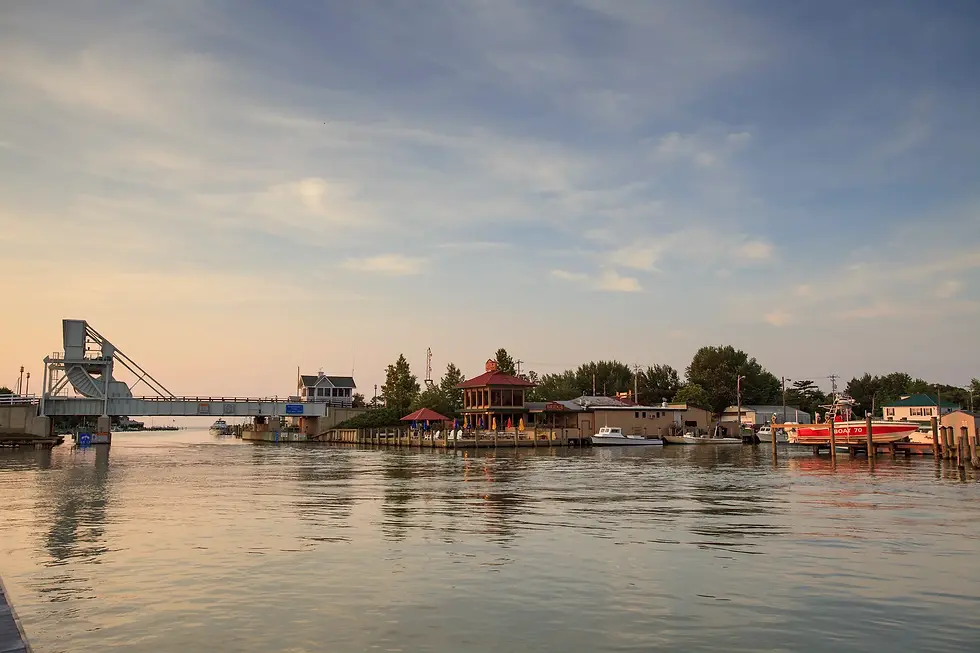
You don’t “swing by” Tilghman. You don’t loop it into a Shore weekend accidentally. You don’t discover it while looking for something else. You drive toward it deliberately, cross a bridge that feels longer than it is, and keep going even after the road stops offering reassurance.
That moment—when the road narrows and the island doesn’t try to impress you—is the entire point.
Tilghman doesn’t reward curiosity.
It rewards intention.
An Island That Quietly Filters People Out
Tilghman Island is not difficult to reach in a logistical sense. There’s a bridge. There are signs. It’s not hidden.
But it is difficult in a psychological sense.
There’s no clear “arrival.” No charming main street moment. No welcome sign telling you what you’re supposed to feel when you get there. The island doesn’t orient itself around visitors, and it doesn’t correct you if you misunderstand it.
That absence does something important: it filters.
People who need structure, stimulation, or affirmation tend to feel uneasy here. They ask questions like “Is this it?” or “Where’s the rest of it?” They don’t mean anything by it—they just expect places to perform.
Tilghman doesn’t.
And the people who relax when nothing performs?They start to understand the island almost immediately.
Life Here Isn’t Slower — It’s Less Negotiable
People often describe Tilghman as “slow,” but that’s not quite right.
Life on Tilghman isn’t slow—it’s non-negotiable.
The water decides things. Weather decides things. Light decides things. Boats don’t leave because it’s convenient; they leave because it’s time. Meals don’t happen because you’re hungry; they happen because the day allows for them.
If you’re used to shaping your environment around your preferences, Tilghman feels uncooperative.If you’re used to adapting, it feels clarifying.
That’s why people who live or spend real time here don’t talk about schedules. They talk about conditions.

The Water Isn’t the View — It’s the Framework
On much of the Eastern Shore, the water is scenery. Something you look at while doing something else.
On Tilghman, the water is the operating system.
Boats aren’t decorative. Docks aren’t accessories. The working waterfront still works. That distinction matters because it keeps the island honest.
There’s no attempt to turn the water into an amenity divorced from its function. No one pretends it’s here for ambiance. It’s here because it always has been—and because people still rely on it.
That reality shapes everything else, from how people move through the day to how they relate to one another.
Where You Eat Matters Less Than When You Eat
Dining on Tilghman is one of the fastest ways to misunderstand it.
If you arrive expecting options, you’ll be disappointed.If you arrive understanding that eating here is part of the day’s rhythm—not a standalone event—you’ll do just fine.
Places like Two If By Sea aren’t destinations in the Instagram sense. They’re social infrastructure. Breakfast matters more than dinner. Lunch matters more than atmosphere. Conversation matters more than menus.
You don’t come here to be impressed. You come here to be absorbed.
Some long-standing establishments have come and gone over time—not because the island failed them, but because Tilghman is unforgiving to anything that misunderstands its role. Seasonal economics, staffing realities, and weather all apply pressure here. If something doesn’t fit naturally into the day-to-day life of the island, it doesn’t last.
That isn’t a flaw.
It’s proof that the place knows what it is.
Tilghman doesn’t adjust itself to you. It waits to see if you adjust to it.
Tilghman Is Not a Weekend Island (And That’s the Trap)
One of the most common mistakes people make is trying to experience Tilghman as a weekend destination.
The island doesn’t reveal itself on demand. It doesn’t compress well. If you’re only here for two days, you’re likely to miss what matters—not because you didn’t do enough, but because nothing here is designed to be done.
Tilghman makes sense through repetition.
It makes sense when you’ve driven the bridge in different weather. When you’ve eaten at the same place at different times of day. When you recognize boats not because they’re interesting, but because they’re familiar.
People who choose Tilghman don’t talk about their first visit. They talk about their fifth.
Who Tilghman Works For — And Who It Doesn’t
Tilghman is not aspirational in the modern sense. It doesn’t sell a lifestyle; it reveals one.
It tends to work best for:
People already comfortable around the water
Second-home owners who value quiet over programming
Buyers who want presence without performance
People who don’t need their surroundings to validate them
It tends not to work for:
Checklist travelers
Socially driven weekenders
Buyers who want convenience framed as luxury
Anyone who needs a place to explain itself
This isn’t judgment. It’s compatibility.
Tilghman vs the Rest of the Shore (Quietly Compared)
Compared to St. Michaels, Tilghman feels unfinished—and that’s intentional. It doesn’t curate charm. It doesn’t buffer the edges. It allows friction.
Compared to Oxford, Tilghman feels more functional. Less polished. More directly tied to labor than romance.
Compared to Cambridge, Tilghman feels inward-facing. It doesn’t absorb outside energy; it resists it.
These differences aren’t about better or worse. They’re about orientation.
Tilghman isn’t trying to attract. It’s trying to remain coherent.
Ownership Here Is About Stewardship, Not Status
Owning on Tilghman—whether full-time or part-time—is less about acquisition and more about acceptance.
Weather matters more. Access matters more than aesthetics. Improvements prioritize durability over novelty. Neighbors notice patterns, not appearances.
Tilghman doesn’t reward short-term thinking. It doesn’t punish it either—it simply ignores it.

Why Tilghman Resists Change (And Why That’s Valuable)
Tilghman’s resistance to change isn’t nostalgia. It’s structural.
Geography limits expansion. Economics limit speculation. Culture limits performative transformation. Together, those forces slow the island down—not because it can’t change, but because it doesn’t need to rush.
In a region where many towns are being optimized for visibility, Tilghman remains optimized for continuity.
That stability is increasingly rare—and quietly valuable.
Why People Who Choose Tilghman Rarely Replace It
Over time, something subtle happens: Tilghman becomes the reference point.
Other places feel louder. Faster. More negotiable. Not worse—just less grounded.
The island becomes where life simplifies instead of expands. Where identity softens instead of sharpens. Where nothing is competing for your attention.
People don’t move on from Tilghman. They carry it with them.
The Point of Tilghman, Finally
Tilghman Island isn’t trying to be discovered. It isn’t hiding either. It exists exactly as it needs to, waiting for people who are ready to meet it without expectations—and without demands.
You don’t end up here by accident. You choose it when you’re done being impressed and ready to belong quietly to something that doesn’t care whether you noticed it or not.
For some people, places like Tilghman don’t just clarify where they want to go—they clarify what they’re ready for next.


Comments